
Johnson County's Most Wanted Program
The sheriff's online resources page carries a heading called "Most Wanted List and Alerts," but the entries underneath lead out to other programs. Federal agencies are listed there, along with Iowa City Area Crime Stoppers. Johnson County itself posts no roster of wanted people. The county's resource page shows the directory format.
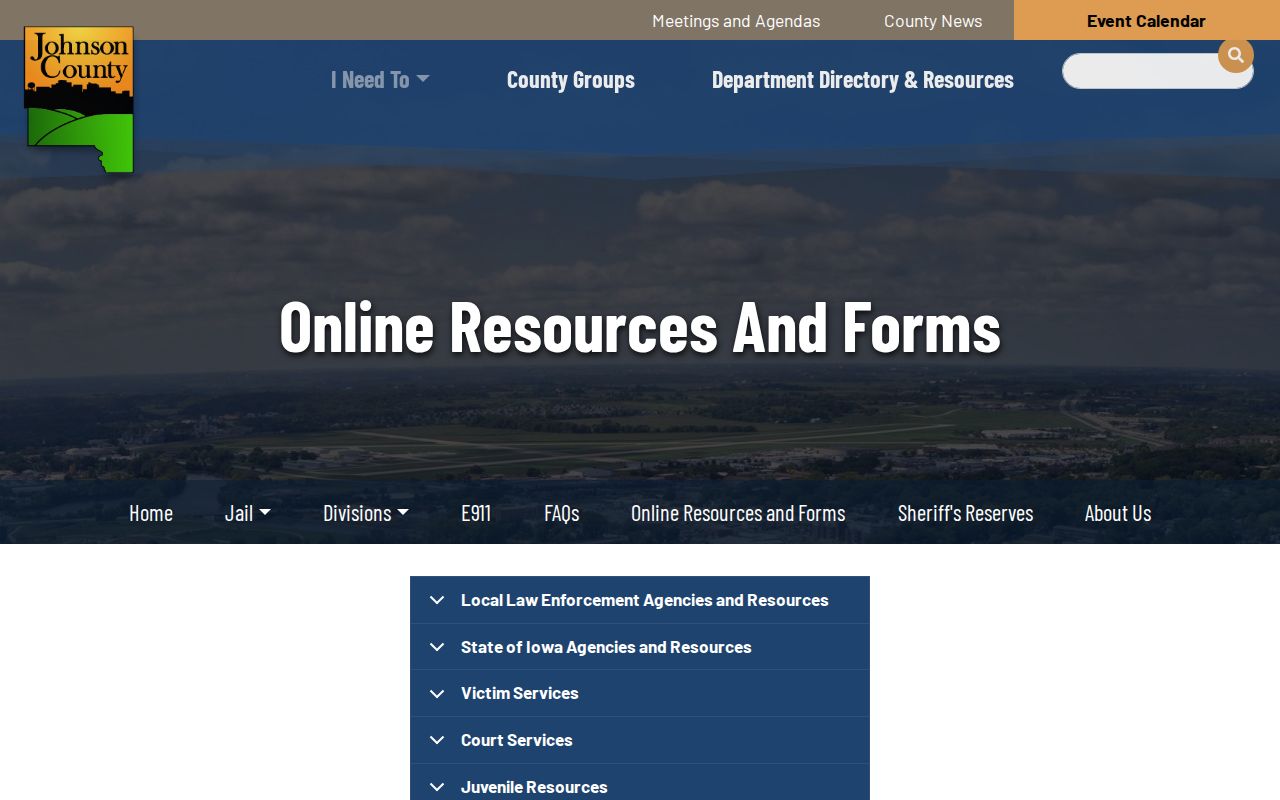
That directory is the key distinction: Johnson County links out to agency programs rather than hosting a person-level wanted list. Program links shift as those agencies change priorities, so what appears one month may differ the next. For names, photos, and instructions, the live agency page is the place to look, not a copy.
Johnson County Resource Directory
The county directory points to wanted programs run by the FBI, U.S. Marshals Service, ATF, DEA, Secret Service, Air Force Office of Special Investigations, RCMP, and Interpol. Those are federal and international efforts, not a Johnson County active-warrant database. Iowa Courts Online is a different tool entirely. It indexes the public side of Iowa state court cases, not a federal warrant search. A federal concern belongs with the federal court or agency that issued it, plus a lawyer. A state matter follows the usual Johnson County sheriff and district-court routes.
How the Most Wanted Lists Work
Each most-wanted list is chosen by the agency behind it, highlighting select matters under its own program rules. It never shows all outstanding warrants, and an empty result proves nothing either way. Johnson County has published no local selection rule, reward schedule, or update frequency. Status changes fast, too, through arrest, surrender, recall, or other official action. A saved or copied profile can go stale the moment that happens. Use the live official page, not a cached one.
Note: A wanted page is a limited snapshot; only the responsible court or agency can confirm current warrant status.
No Johnson County Roster Located
Johnson County publishes no full active-warrant list and no county most-wanted roster. That is a matter of access, not proof that no warrants exist. Before service, warrant material stays confidential under Iowa Code section 804.29. For your own status, the Sheriff FAQ says you may go in person to any law-enforcement agency. Once a warrant is served, or in an existing case, public information can surface through Iowa Courts Online. Confirm with the clerk or the agency.
Reporting a Tip Safely
Send tips through the official Crime Stoppers program and its current tip channel. Its landing page identifies the local Johnson County program and its reporting options.
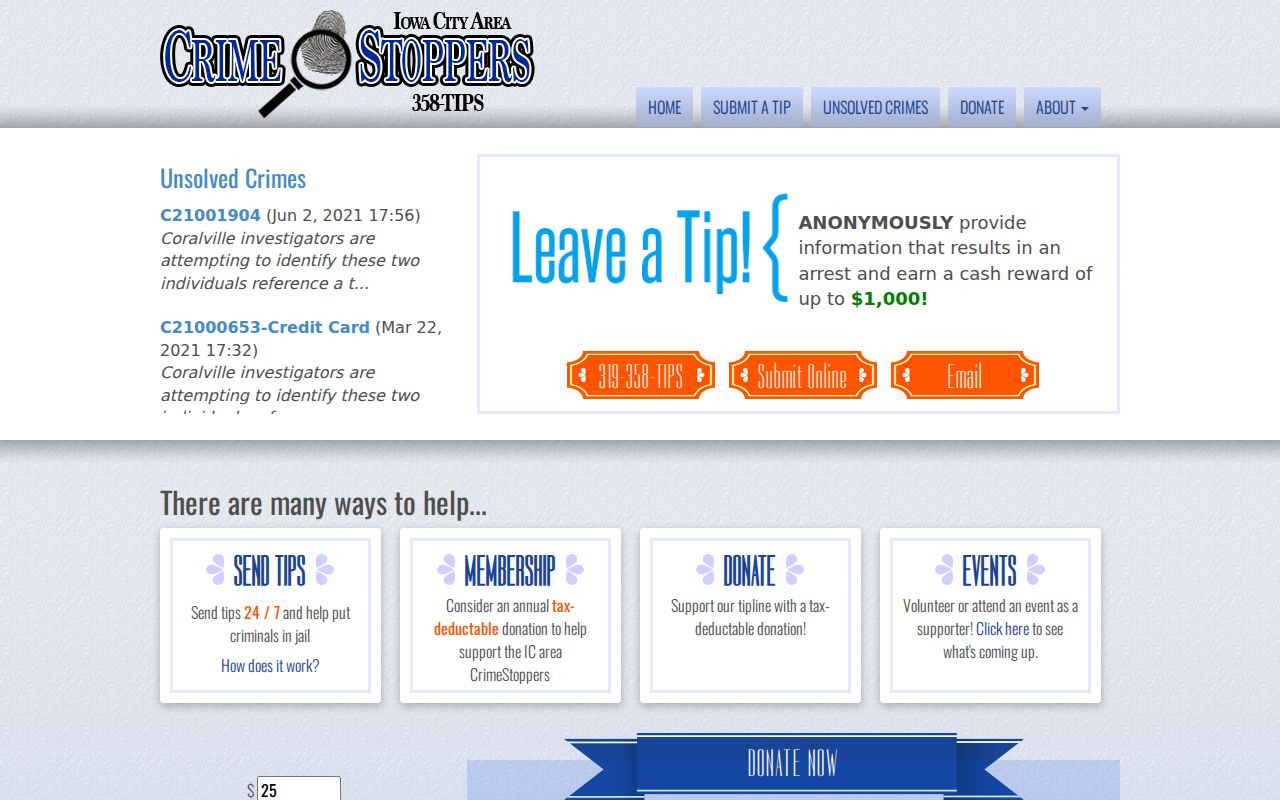
Safe reporting is the program's focus. Johnson County sources state no fixed reward amount, tip-line detail, anonymity promise, or payment method. Get those specifics from the program itself before assuming anything.
- Open the official program page and use only the channel it currently publishes.
- Give the facts requested without posting them publicly or using an unofficial account.
- Never approach, follow, confront, or try to detain a person.
- For an immediate threat or emergency, call 911 instead of waiting on a web tip.
Key Point: Report through an official channel and step back; never confront or pursue a person shown by a wanted program.
Tips Are Not Self-Surrender
A tip just passes along information. It does not verify your own warrant, set up bond, or create any safe-surrender deal. If you believe a program may list you, call a defense attorney and the originating court or agency. Ask about confirmation, voluntary surrender, initial appearance, bond, and a motion to recall. For non-emergency routing, call 319-356-6800; dispatch is not a public database.
Most Wanted Lists vs Active Warrants
A most-wanted page is selective public communication. An active warrant is a court status that may stay confidential or sit only in restricted systems. Johnson County offers no public list joining the two.
| Feature | Most Wanted List | Active Warrant |
|---|---|---|
| Scope | Limited, curated publication | Operational court or agency status |
| Publisher | The program agency | Issuing court and authorized systems |
| Visibility | Only selected public profiles | May be public, restricted, or confidential |
| Resolution | Contact counsel and originating agency | Court recall, surrender, appearance, or bond |
Johnson County Agencies Coordinate Service
A September 2025 County Attorney release reported local, state, federal, and nearby agencies teaming up to serve warrants in Johnson County. That was a one-time joint operation, though, not a standing most-wanted program. The office that serves a warrant may not be the court that issued it. The release named no cases, charges, or addresses for the people involved.
If You Think You Are on a List
Talk to an attorney first, then verify any warrant through the court or agency that issued it. A copied profile or a blank search result settles nothing. Counsel can raise surrender plans, bond, an initial appearance, and whether the court will recall or quash the warrant. For an Iowa case open to the public, search Iowa Courts Online and call the Johnson County clerk at 319-356-6060. For process still unserved, follow the Sheriff's in-person instruction. Confirm surrender logistics before you arrive.
Important: Consult counsel before acting; an attorney can confirm the warrant and coordinate surrender, court appearance, and bond questions.
Johnson County Wanted-List Limits
The restricted IOWA System connects authorized criminal-justice agencies with NCIC. It is not a public name-search screen, and a records request will not open its returns. Jail statistics count custody, not active warrants. Johnson County runs no amnesty day or warrant roundup that any office advertises. The ordinary routes apply: court, counsel, agency, surrender, bond. Any future notice should be checked for dates, eligibility, arrest protection, and whether it actually recalls a warrant.
Federal Links Are Separate Programs
The official FBI Wanted program and the U.S. Marshals fugitive-apprehension effort belong to federal agencies, separate from anything in Johnson County. The FBI's wanted page can be checked directly.

One clean habit runs through this part of Johnson County warrant records. The Sheriff's directory simply links out. ATF, DEA, Secret Service, AFOSI, RCMP, and Interpol each appear there, and each program sets its own scope and its own tip instructions. Nothing is copied or republished locally. That matters more than it sounds. A federal agency can revise or pull a profile after official action, while a copied page sits stale forever. Linking to the live interface keeps control where it belongs, with the public office that owns the record. It also keeps person-level content off private pages in Johnson County. A few cautions follow. A federal profile says nothing about the status of an Iowa state case, and Iowa Courts Online shows only the public portions of Iowa court records. Anyone facing a claimed federal warrant should verify it through counsel and the originating federal court or agency. Never send money to a caller who promises payment will remove a profile.
Johnson County Program Facts Not Found
Johnson County posts no local roster, reward figure, selection policy, posting schedule, or update cadence, and it names no county fugitive task force. So treat those as unknown. Iowa City Area Crime Stoppers serves as the local tip program, but its current rules live on its own site. Never assume a cash amount or an anonymity term. What remains is the safe route itself. Send a tip through the current program channel. Call 911 for an emergency. For personal warrant status, contact the responsible court or agency directly, since a tip form is not the place to ask about warrant recall, surrender terms, or legal advice in Johnson County.
Johnson County Status Confirmation
Sometimes a served warrant or another case event shows in the public Iowa docket. Look for a case ID, the event, a filed date, status, service fields, and bond entries. A blank result means less than people hope. It can reflect confidentiality, a sealed or juvenile matter, filing delay, the wrong county, or a search mismatch. It cannot certify that no warrant exists. For answers, the Johnson County clerk sits at 417 S Clinton Street in Iowa City and handles public court-record questions. Sheriff warrant-information routing uses 319-356-6800. For a person's own possible initial warrant, follow the Sheriff's in-person instruction, which stands apart from every most-wanted program link.